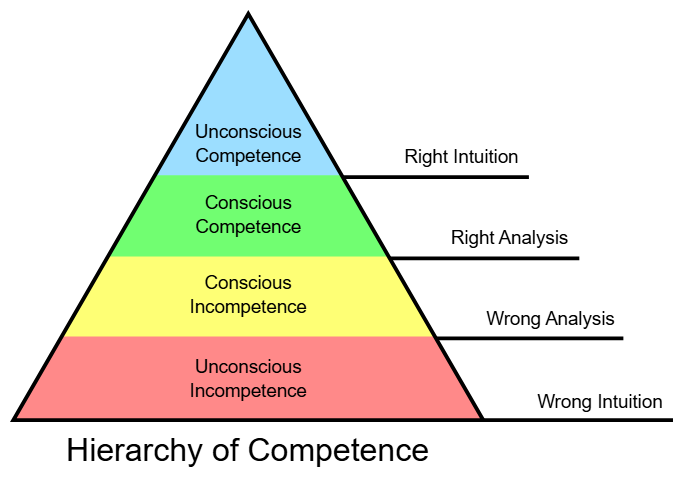
From Novice to Master: The Competence Hierarchy
You know that feeling when you try something new and suddenly become extremely aware of how unqualified you are? Like the first time you used Excel and somehow, the entire sheet comes up in a glorious wall of red errors?
Turns out, there's a name for that deeply humbling experience. It's called the Competence Hierarchy. And it's not just some corporate training diagram gathering dust in an onboarding folder... it's actually kind of useful when you're spiralling over not being immediately amazing at something. Which, if you're anything like me, happens more often than I'd like to admit.
Stage 1: Unconscious Incompetence - When you don't know that you don't know.
This is before you even get on the bike. You've watched people ride, it looks easy, and you're already mentally drafting your Tour de France acceptance speech.
Confident. Bold. Completely unaware that gravity is about to have a word with you.
What helps: Curiosity. Talking to people who've already fallen off a few times. And maybe reconsidering that downhill slope as your starting point.

Stage 2: Conscious Incompetence - You now know that you don't know.
Socrates once said "I know that I know nothing." He was probably recovering from Stage 1.
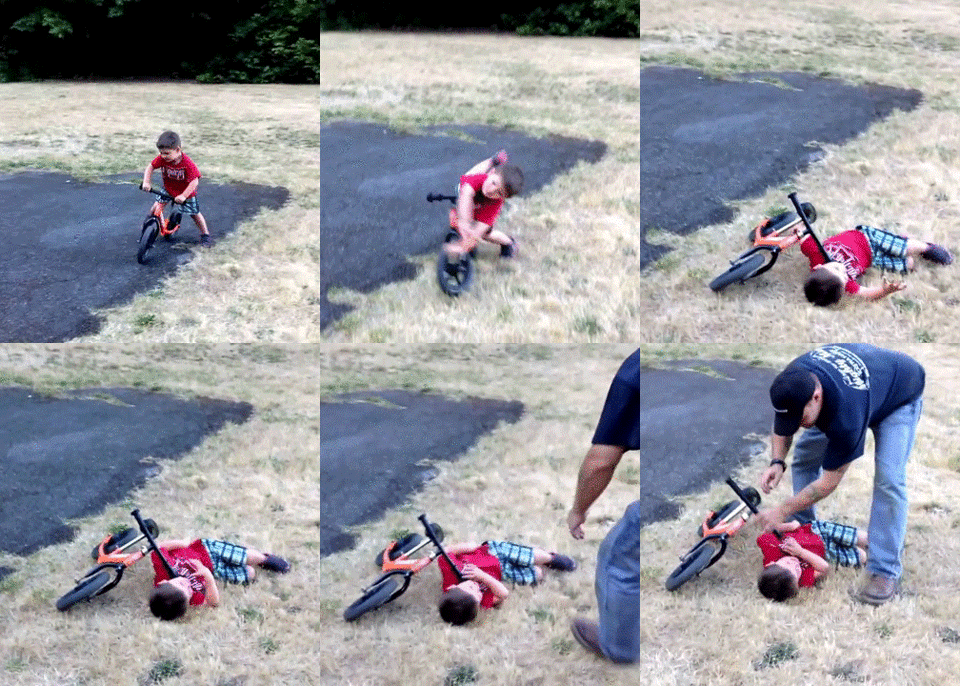
You get on the bike... and immediately fall off. Wobble, panic-brake, or career headfirst into a hedge. You realise, with full clarity, that there are entire skills you need to develop before this is going to work.
It's frustrating. It's embarrassing. It's bruising (figuratively, and honestly, sometimes literally). But this is where you start to actually understand what it takes.
What helps: Accepting the flailing. Laughing a bit. Finding a soft patch of grass for the inevitable.
Stage 3: Conscious Competence You can do the thing, but you have to really think about it.
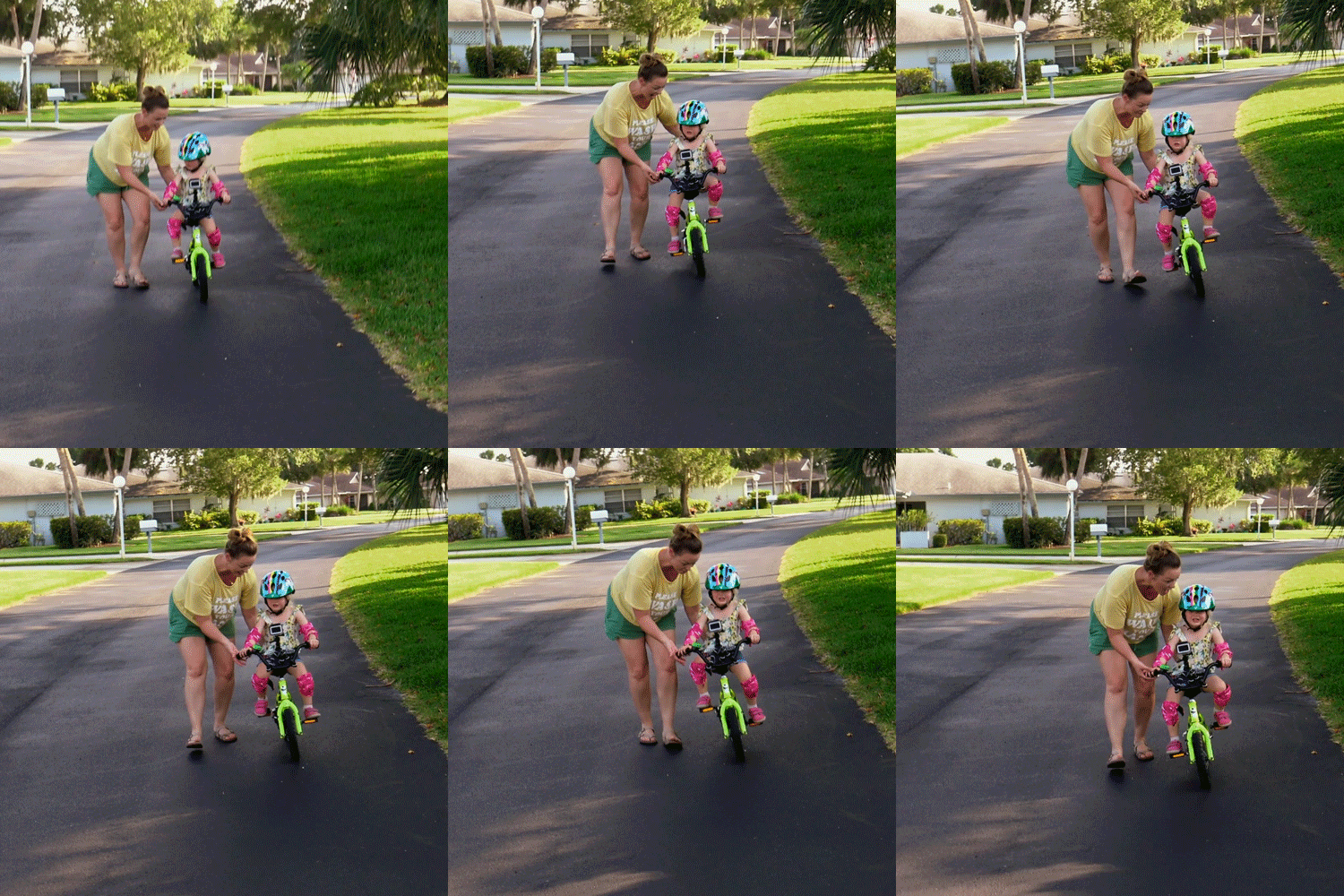
You're on the bike. Pedalling. Balancing. But if someone tries to talk to you, you might crash. You're laser-focused, hands clenched on the handlebars, quietly whispering "don't fall, don't fall" like a mantra.
Progress. But not exactly relaxing.
What helps: Repetition. A flat path. Someone jogging alongside you, cheering you on and pretending not to notice the sweat.
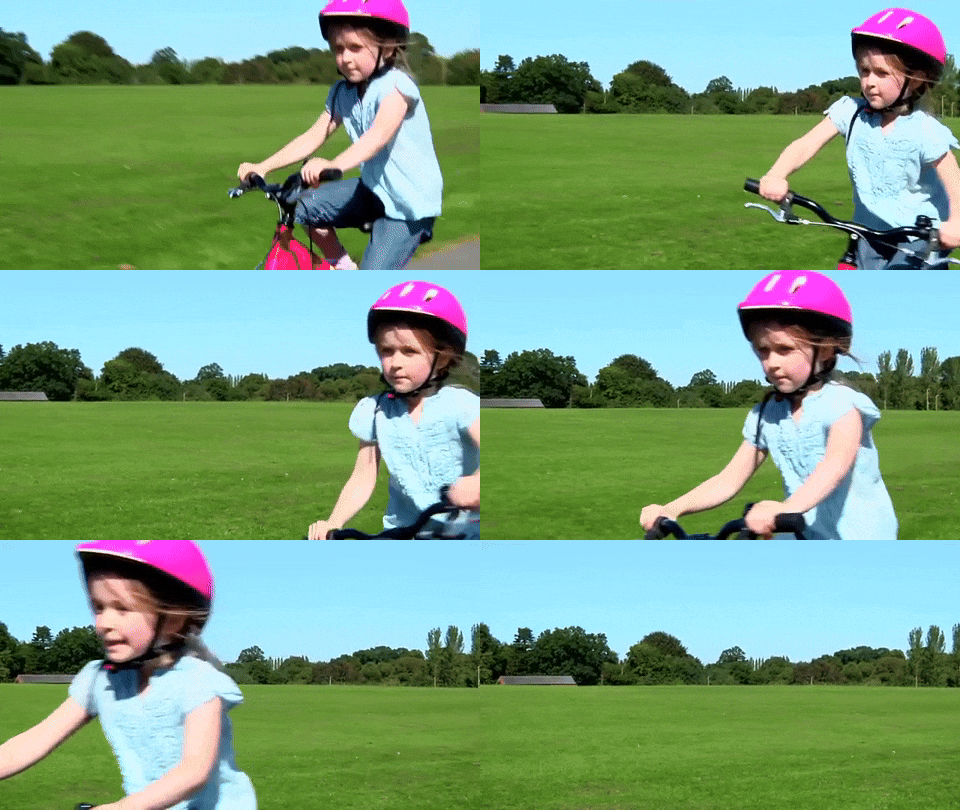
Stage 4: Unconscious Competence You're doing it without thinking.
Hands off the handlebars. Maybe chewing gum. The bike just feels like part of you now. You barely remember how hard it was to start. The balance, the rhythm, the confidence... all just internalised somewhere along the way.
What helps: Looking back occasionally to appreciate how far you've actually come. Not gatekeeping the shortcuts.

Stage 5 (Bonus): Reflective Competence You can do it and explain it.
You're not just riding. You can break it down for someone else. You remember what it felt like to wobble, and instead of letting people figure it out the hard way, you say things like "start with your dominant foot on the pedal" and "don't look down."
You're not just good. You're generous with it.
What helps: Staying curious. Teaching without being patronising. Letting people learn at their own pace.
A few things we tend to forget
You can be at multiple stages at once. Confident on the bike, clueless with the gears. It's a loop, not a ladder, and every new skill starts you back at Stage 1 whether you like it or not.